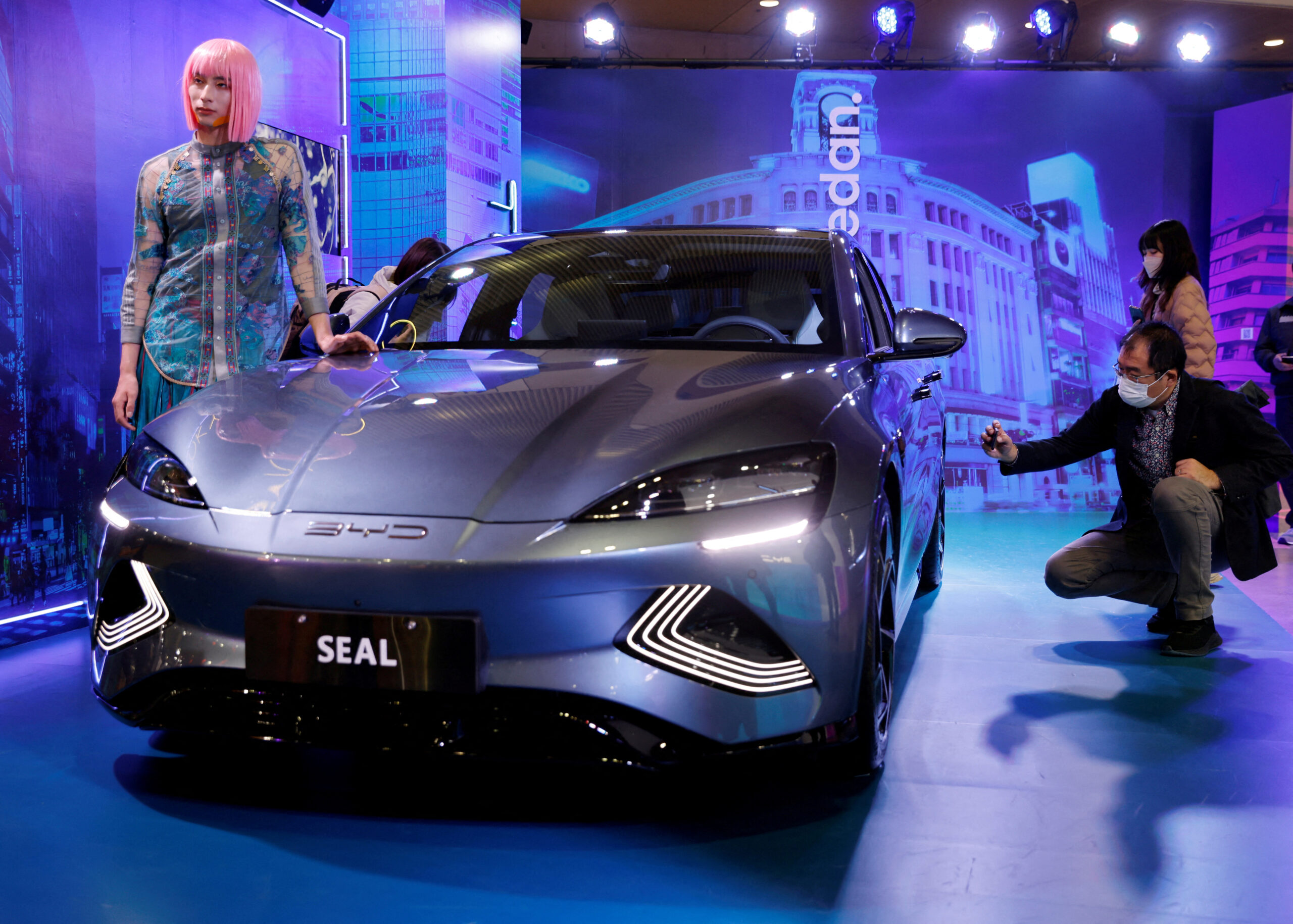
Chinese BYD is promoting super-fast charging technology to attract drivers who are still loyal to gasoline vehicles and to enhance its competitiveness in the world’s largest automotive market. The company’s second-highest executive stated on Friday that steps have been taken in this regard.
BYD, which has shown rapid growth to become the world’s largest electric vehicle manufacturer, has experienced a decline in domestic sales for seven consecutive months due to fierce price wars and intense competition from local rivals.
The company is launching more models with super-fast “flash” charging features to win over drivers who have been hesitant about electric vehicles due to range anxiety and long charging times. The company’s vise president, Stella Li, said in the sidelines of the Beijing Auto Show, “Flash charging is very important for BYD because it removes the last barrier to the adoption of electric vehicles,” to Reuters. “This means we can now compete with the gasoline vehicle market.” “This means we can now compete with the gasoline vehicle market.”
BYD says its second-generation batteries can charge from 20% to 97% in less than 12 minutes even at -20 degrees Celsius (-4 Fahrenheit) and provide a driving range of 777 kilometers (483 miles).
Li stated that this technology could help BYD create a strong defense line against its competitors. In this regard, the car manufacturer plans to install approximately 20,000 fast charging stations in China and 6,000 abroad within the next 12 months.
BYD’s recent slowdown in the domestic market – once seen as invincible – highlights the intensity of competition in the Chinese automotive market.
Sales increased more than tenfold from 420,000 vehicles in 2020 to 4.6 million in 2025, making BYD the world’s fifth-largest car manufacturer by volume.

Producing fully electric cars and plug-in hybrids, BYD surpassed Volkswagen in 2024 to become China’s largest car manufacturer, ending the German group’s 25-year market leadership. Last year, it surpassed Tesla to become the world’s largest electric vehicle manufacturer.
However, since peaking at the end of May last year, BYD shares have fallen 25%, and the company recorded a decline in annual profit last month for the first time in four years.
Domestic sales were pressured by competitors like Geely (GEELY.UL) and Leapmotor, prompting BYD to undertake its first major battery upgrade in six years.
Gartner analyst Pedro Pacheco said, “This doesn’t necessarily mean BYD is in bad shape.” “But they were growing very fast, and their current situation looks bad. “But they were growing very quickly, their current situation looks bad.”
Geely took the top spot in new car sales in China in January and February, briefly pushing BYD down to fourth place. According to company sources, Geely aims to sustainably become China’s number one car manufacturer within 12 to 18 months.
Automotive analyst Felipe Munoz said, “They are not misjudging consumers in China.” “BYD knows what consumers want very well, but the competition is greater. BYD knows very well what consumers want, but the competition is tougher.
While sales in the domestic market are slowing down, BYD is aggressively expanding abroad. Sales in Europe are expected to increase by 270% by 2025, showing a 156% increase in the first quarter.
The company had told analysts in March that it was “extremely confident” in reaching its overseas sales target of 1.5 million or more vehicles for 2026, following sales outside China reaching 1 million vehicles in 2025.
BYD aims for half of its new car sales to come from overseas markets by 2030.
